
ASSIST Vietnam-Thailand
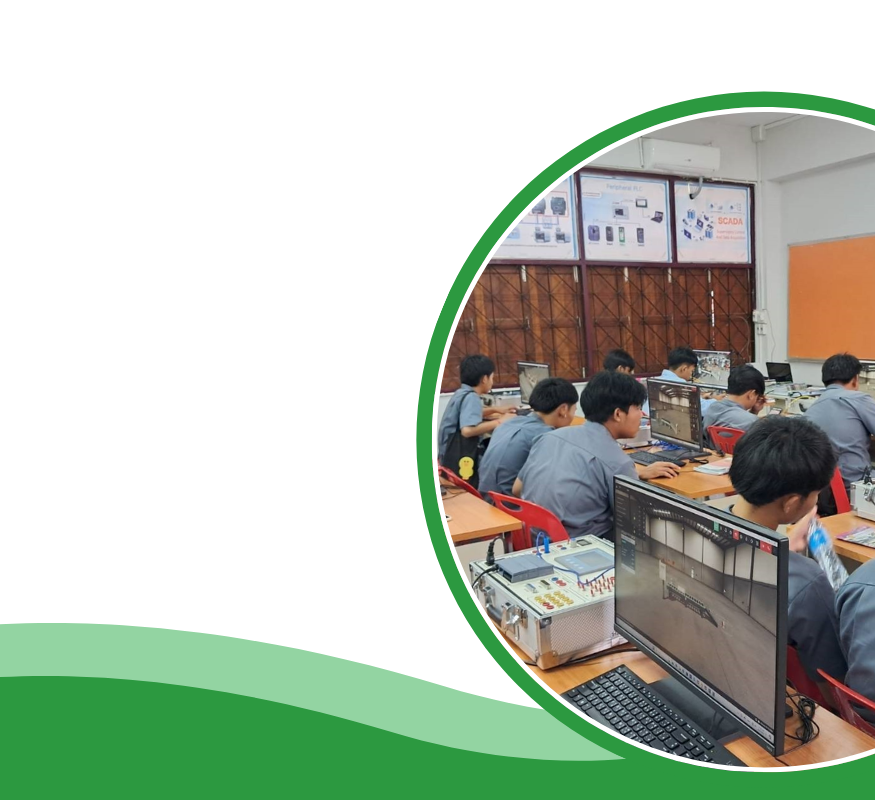
The Center of Excellence Thailand (CoE Thailand) aims to foster an environment where underprivileged youth and workers stand the chance to harness their vocational skills and adapt to the fast-paced Industry 4.0. To tackle the country’s persistent shortage of qualified human workforce and lay a solid foundation for Thailand’s rebound from COVID-19, this project facilitates vocational education and training (VET) with the development of 1 CoE and 12 Standards Training Centers nationwide. Through this initiative, those in need of training in this highly fluid and competitive market can expand educational and employment opportunities. Plus, employers can also overcome hiring difficulties and bridge the shortfall in vocational qualifications.
This impact measurement is based on data collected from CoE Thailand participants. 281 responses were obtained out of a total population of 500 with a margin of error of 5%. Since the margin of error is reasonable, the results can be representative of the population.
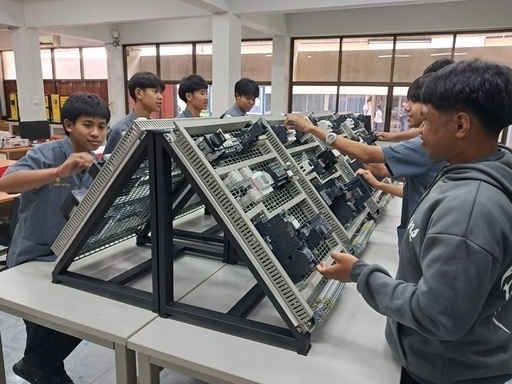
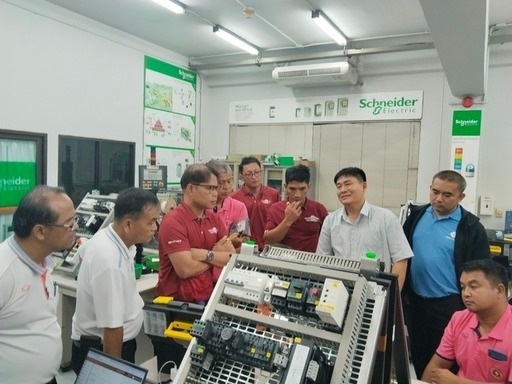
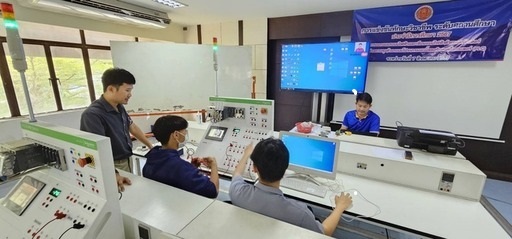
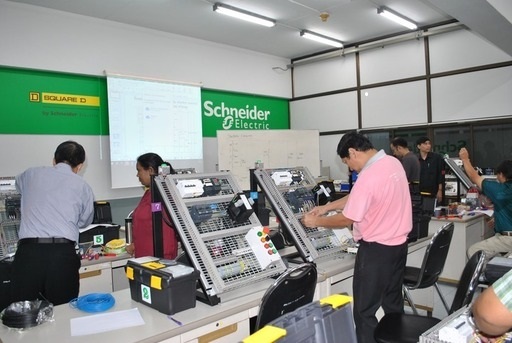
- Trainees : Vocational college students, university students eager to learn about new technology and gain hands-on experience, as well as workers from nearby factories seeking to upgrade their skills and knowledge of Schneider’s technology to improve their job prospects
Our actions
WHAT
Actions
- Provide trainees with technical and soft skills training
- Offer practical experiences to trainees
- Inspire trainees to pursue their training
Our analysis
In terms of age, the average age of participants remained relatively consistent throughout the project, at around 19.5 years. Since the training is provided to students in the Electrical Department, male students outnumbered female students, accounting for 86.1% of the participants. Males continue to dominate this field; however, there are female students who pursue these trainings as well. The motivations for attending the project varied significantly. The most common response was “I wanted to learn new technical skills,” accounting for 45.6%—the highest percentage. Other responses reflected similar interests, such as “I had an interest in the sector” and “I wanted to follow a training course.” Ultimately, most participants want to gain new knowledge, learn about new technology, and acquire hands-on experience—goals that align perfectly with the objectives of the project.
HOW MUCH
Trainees' motivation for the training program
Trainees Gender ratio
Trainees' average age
Our results
WHAT
Outcomes
- Acquisition of technical skills adapted to the electricity sector by trainees
- Gain in self-esteem/self-confidence for trainees
- Increased skills of program participants to adapt to a changing work environment, and create more opportunities in the industry
Our analysis
Regarding their technical skills in the energy sector, there was a slight increase in the percentage of students rating themselves 3 or higher—an increase of 6.5%, from 80.1% to 86.6%. This suggests that the trainings are effective; however, we might need a different approach for the remaining students, such as organizing workshops that include hearing more stories from Schneider Electric employees. For soft skills, there was also a slight increase of 2.3%, from 96.5% to 98.8%, even though the training materials did not include any specific sessions focused on these skills. During their hands-on training, students had opportunities to develop communication, presentation, teamwork, and individual work skills. To further increase the percentage of students rating themselves 4 or higher, we might consider organizing specific training sessions targeting these soft skills. An interesting observation is that after the training, there was an increase in students rating themselves at level 4; however, there was a decrease in those rating themselves at level 5. The project’s training might have helped students better assess their technical skills, allowing them to place more realistic trust in their abilities.
HOW MUCH
Evolution of trainees perception of their technical skills for the energy sector
Evolution of trainees perception of their soft skills
Evolution of Trainees' level of self-confidence
Our impact
WHAT
Impacts
- Raise of income
- Improved knowledge about Schneider Products. Provided certified skilled resources to the market
Our analysis
More and more students are becoming familiar with Schneider products, and the skills they gain can be valuable for future job searches. In addition, these trainings provide the market with certified, skilled professionals and help increase the adoption of green technologies in Thailand. Overall, 59.8% of trainees reported that they developed their professional network thanks to the training. Additionally, 40.2% of trainees strongly agreed that they would be capable of supporting their families as a result of the training, while 50% partially agreed with this statement.
HOW MUCH
% of trainees capable to support their family as a result of the training
% of trainees stating they developed their professional network thanks to the training
Who we are
- Aru David
Project Director
- Paiboon Saiyawongs
Project Manager - Thailand


The Center of Excellence Thailand (CoE Thailand)
In partnership with Schneider Electric, sponsored by Schneider Foundation, the project puts great emphasis on developing in-demand competencies with pathways for upskilling to satisfy industrial development needs, breaking the barrier of limited qualified vocational trainers, inadequate equipment, and insufficient practical experience during training.